By Lauren Holland
Updated November 2026
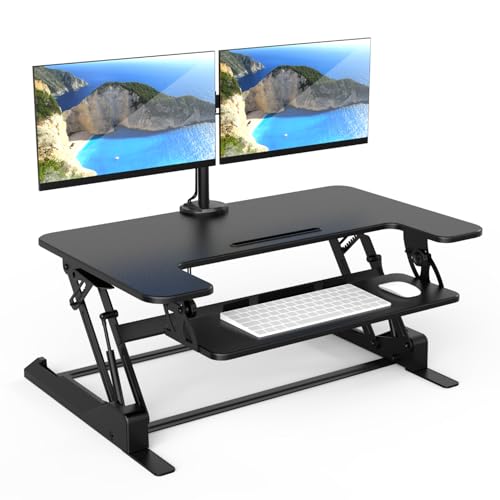
The best home office standing desk is the one that fits your height, your workspace and the way you actually work. In this guide, you will learn how to measure your setup, compare the features that matter and set the desk so your shoulders, elbows and wrists stay relaxed. Most of the decision comes down to a few specifications you can check before you buy.
Start with Your Height and Workspace
Before comparing models, measure two things: your standing elbow height and the depth and width of the room you have. Stand upright in your usual shoes, let your arms hang, and bend your elbows to 90 degrees. Measure from the floor to the bottom of your elbow. That number is your target desktop height when you are standing.
Next, measure the space. Leave room for your chair, a monitor arm if you use one, and at least 36 inches of clear floor behind the chair so you can move freely. Many home offices are shallow, so a desk depth of 24 to 30 inches is common and often sufficient for a laptop plus a monitor.
Compare the Lift Mechanism and Height Range
The lifting system determines how smoothly and quietly the desk moves, and whether it can reach the heights you need. Two types dominate the market:
- Dual-motor electric desks use two motors for more stable lifting, usually with higher weight capacity. They suit heavy monitor setups and taller users.
- Single-motor electric desks are lighter and often quieter, and work well for laptop-based setups.
Check the manufacturer’s stated minimum and maximum height. Your desk must reach your standing elbow height and your seated elbow height, which is usually a few inches lower than your standing height. A range of roughly 28 to 48 inches covers most adults, but confirm the specific numbers in the product listing.
Check Stability, Memory Presets and Cable Management
A wobbly desk makes typing frustrating and can jostle your screen. Look for a frame described as sturdy or stable at full height, and read reviews that mention wobble specifically. Memory presets, which store two or more heights, save time when you switch between sitting and standing. Cable management trays or grommets keep power and monitor cords out of your way, which matters when the desk moves up and down.
- Measure your standing elbow height and seated elbow height.
- Measure your room, leaving space behind the chair.
- Confirm the desk’s height range covers both numbers.
- Choose single or dual motor based on your monitor and weight needs.
- Set a standing and sitting preset, then adjust once you have used it for a few days.
Set Up the Desk for Comfort
Once the desk is in place, set your monitor top edge at or slightly below eye level, about an arm’s length away. Keep your wrists straight while typing. When standing, shift your weight between feet and consider a anti-fatigue mat. Alternate between sitting and standing rather than standing for hours at a stretch.
Common mistakes
- Buying a desk without measuring your elbow height first.
- Choosing a single-motor desk for a heavy multi-monitor setup.
- Setting the desk too high, which raises the shoulders.
- Standing all day instead of alternating positions.
- Ignoring cable management until cords tangle during height changes.
Recommended gear
A standing desk pairs well with a few supporting items that make long sessions more comfortable. A related read: 3 Best Standing Desks with Storage for Home Offices (2026).
- A monitor arm lets you position the screen at eye level and frees up desk space. View on Amazon
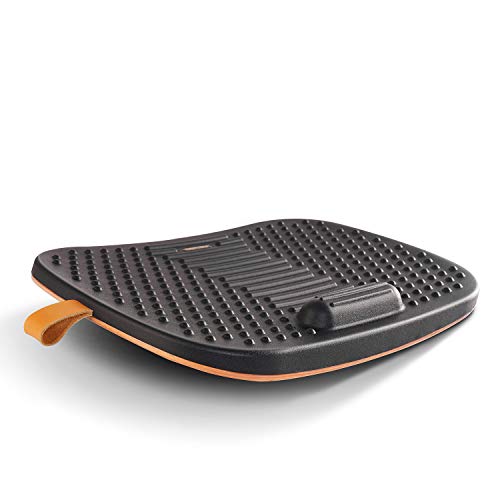
- An anti-fatigue mat cushions your feet and encourages small weight shifts while standing. View on Amazon
- A cable tray keeps power strips and cords organized beneath the desktop. View on Amazon
For more options on seating to pair with your desk, see 6 Best Ergonomic Standing Desk Chair Picks for Every Home Office (2026) and 5 Best Tall Office Chairs for Standing Desk Ergonomic Picks (2026). If you want a ready list of desk models, 6 Best Standing Desk for Home Office (2026): Expert Picks is a useful next read.
FAQ
How tall should a standing desk be for me?
Measure from the floor to your bent elbow while standing, then set the desktop at that height. Your forearms should rest level or slightly downward while typing.
Is a dual-motor desk always better?
Not always. Dual motors offer more stability and capacity, which helps with heavy monitors, but a single-motor desk can be enough for a laptop setup.
How long should I stand each day?
Many people alternate, standing for short blocks and sitting in between. Start gradually and adjust based on how your body feels. Consult a healthcare professional if you have joint or back concerns. Standing Desk Add On: How to Choose and Fit One in 5 Steps goes further into this.
Conclusion
To find the best home office standing desk, measure your elbow height and workspace first, then confirm the height range, lift type and stability. Set up your monitor and keyboard to match your posture, and alternate positions through the day. A well-chosen desk pays off most when you use it consistently.
Related reading
Ready to choose one?
About Lauren Holland
Lauren Holland is part of our editorial team and reviews and edits our fitness at work guides, checking product details against manufacturer specifications and owner feedback.