 By Lauren Holland
Updated November 2026
A lower back pain standing desk problem usually comes down to setup and habits, not the desk itself. In this guide you will check your desk height, adjust your posture, and build a simple movement routine that reduces strain over a full workday. If your pain is sharp, spreads down a leg, or does not improve within a couple of weeks, see a doctor or physical therapist before you change anything else.
Why a Standing Desk Can Strain Your Lower Back
Standing still for long periods loads the spine and the muscles around it without much movement to share the work. Many people also lock their knees, shift their weight to one hip, or lean forward on the keyboard. Standing desk and lower back pain often show up together for these reasons, not because standing itself is harmful. Many people who stand for part of the day find a steady rhythm of sitting and standing easier on the back than either position alone.
Shopping for one? See our guide: Ergonomic Desk Chair Back Pain: 3 Best Picks Compared for Long Workdays.
Set Up Your Standing Desk Correctly
Good setup is the fastest way to reduce strain. Use this checklist:
- Set the desktop so your elbows sit at about 90 degrees with your shoulders relaxed.
- Place the top of the monitor at or slightly below eye level, roughly an arm’s length away.
- Keep the keyboard close enough that your wrists stay straight and your shoulders do not lift.
- Stand with feet about hip-width apart, weight spread evenly, and knees soft rather than locked.
- Use an anti-fatigue mat if you stand on hard flooring for more than a few minutes at a time.
For more detail on dialing in height, see Standing Desk Height Adjustment: A Step-by-Step Guide for Setting It Right. If you want a full walkthrough of the workspace, Standing Workstation for Desk: A Step-by-Step Setup Guide covers the rest.
Change Positions Every 30 to 45 Minutes
Alternating between standing and sitting spreads the load across different muscles. Many people start with 30 minutes standing, then sit for 15 to 20 minutes, and adjust from there. Each time you switch, shift your weight from one foot to the other and take a few slow breaths. Gentle movement helps too; a few seated or standing stretches every hour can prevent the stiffness that builds during long stretches in one position. Office Stretches for Lower Back Pain: 6 Moves for Quick Relief offers quick options you can do without leaving your workspace.
Build a Short Daily Movement Routine
Five minutes of targeted movement often helps more than an occasional long session. Try these:
- Standing pelvic tilts: 8 to 10 slow repetitions to ease tension in the lower back.
- Gentle hip hinges: push your hips back and bend slightly at the waist, keeping your back flat, for 8 repetitions.
- Calf raises: 10 repetitions to keep blood moving in your legs.
- Walking breaks: two to three minutes of walking every hour.
If your back feels better with specific seated moves, Exercises for Lower Back Pain While Sitting at Desk: 6 Moves to Try and Desk Exercises for Lower Back: 7 Moves to Ease Pain at Work are good next reads.
Common Mistakes to Avoid
- Standing for hours without any change in position.
- Locking the knees or leaning on one hip.
- Setting the desk too low, which pushes you to hunch over the keyboard.
- Staring down at a laptop on the desk instead of raising the screen.
- Ignoring pain that worsens during the day instead of adjusting your routine.
Recommended gear
An anti-fatigue mat reduces pressure on the feet and legs, which can make standing more comfortable through the day. View on Amazon
A monitor riser lets you raise the screen to eye level so you are not craning your neck and rounding your upper back. View on Amazon
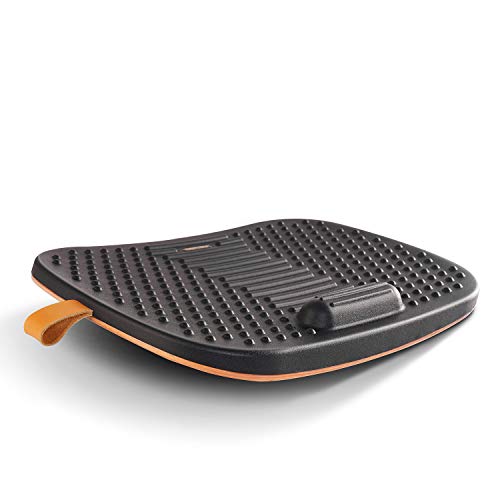
A footrest gives you a place to rest one foot at a time, which many people find helps shift weight off the lower back. View on Amazon
FAQ
Can a standing desk cause lower back pain?
It can, especially if you stand still for long periods with poor posture or a desk at the wrong height. Changing positions regularly and fixing your setup often reduces the problem.
How long should I stand at a standing desk each day?
Many people start with short standing blocks of 20 to 30 minutes and build up gradually as their body adjusts. Listen to your back and sit when standing starts to cause discomfort.
When should I see a doctor about lower back pain from a standing desk?
See a doctor or physical therapist if the pain is severe, lasts more than a couple of weeks, spreads into your legs, or comes with numbness or weakness. A professional can recommend a plan suited to your body.
Conclusion
Most lower back pain linked to a standing desk improves with a correct desk height, relaxed posture, and regular position changes. Pair those habits with a few minutes of movement each hour. If symptoms persist, talk with a healthcare professional before pushing through the discomfort.
Ready to choose one?
About Lauren Holland
Lauren Holland is part of our editorial team and reviews and edits our fitness at work guides, checking product details against manufacturer specifications and owner feedback.