
 By Caleb Morgan
Updated November 2026
The steelcase amia ergonomic chair is a mid-range task chair from a well-known office furniture maker, built around a mesh-and-fabric seat with adjustable lumbar support and upper back support. It suits desk workers who sit for most of the day and want adjustable support without moving up to a top-tier premium chair. It is a weaker fit for people who need a full-size seat with extra padding, anyone looking for a chair that reclines far back, or buyers who only want a basic chair for occasional use. This review is based on the manufacturer’s listed specifications and common owner feedback patterns. It is not based on hands-on testing.
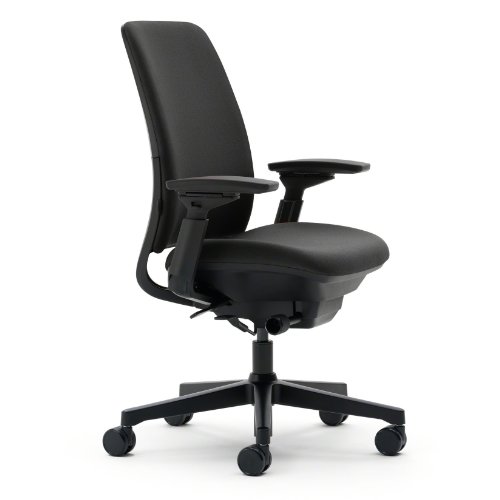
Steelcase Amia Office Chair, Most Comfortable Sit, Buzz2 Black Fabric | Most Comfortable Sit, 4 Points of Adjustability, Ergonomic Desk Chair, Upper Back Support & Adjustable Lumbar Support
Product Overview
The Steelcase Amia is an ergonomic desk chair designed for full workdays at a desk. The listing for this version uses a Buzz2 black fabric upholstery and describes the chair as offering four points of adjustability, upper back support and adjustable lumbar support. Steelcase is a long-established commercial office furniture company, and the Amia belongs to its task chair line rather than its gaming or home-decor lines.
The chair is aimed at people who spend long stretches seated at a computer. Its design focuses on supporting the lower back, letting the torso move with the body and keeping the seat height and arm position easy to adjust. If you are new to ergonomic chairs, the basic idea is that the chair should adapt to you, not the other way around. The Amia is built on that idea. For general background on setting up a chair, see Steelcase Amia Ergonomic Task Chair: Setup, Fit and Buying Guide, which walks through the adjustments step by step.
Key Features & Specifications
The table below lists the features named in the product listing. Confirm exact dimensions, weight capacity and warranty terms on the Amazon page or the manufacturer’s site before you buy, since these can vary by configuration.
| Feature | What It Means |
|---|---|
| Adjustability | Four points of adjustment as named in the listing |
| Upper back support | A supportive upper back area for shoulder and mid-back comfort |
| Lumbar support | Adjustable lower-back support to match the curve of your spine |
| Upholstery | Buzz2 black fabric |
| Chair type | Ergonomic desk task chair |
| Intended use | Long periods of seated desk work |
Specifications such as seat depth, seat height range, arm style, recline mechanism and maximum user weight are set by the manufacturer and differ between versions of the Amia. Always check the exact product page for the version you are buying.
Pros & Cons
Pros
- Adjustable lumbar support helps match the chair to your lower back curve.
- Upper back support is included, which many budget chairs lack.
- Four points of adjustability give more control over fit than basic one-lever chairs.
- Fabric upholstery is breathable and widely described by owners as comfortable for everyday sitting.
- The build fits a commercial-grade expectation, which owners often mention as a durability advantage.
Cons
- Setup takes more time than a simple chair, and the adjustments need to be learned before the chair fits well.
- Fabric upholstery can show wear or dust more visibly than mesh in some environments.
- Owners with very large or very small frames may need to test the seat dimensions carefully.
- The recline range is limited compared with some lounge-style task chairs.
- Replacement parts and service depend on the seller and region, so check support options before buying.
Performance Analysis
Ergonomic performance comes down to three things: how well the seat supports the body, how easily the chair adjusts, and how the materials hold up over time. Based on the listed features, the Amia’s four points of adjustability and its separate lumbar and upper back support give it a more complete set of controls than entry-level chairs. That matters most for people who sit for six to eight hours a day and need the chair to stay comfortable late in the afternoon.
Owner feedback patterns for chairs in this class often center on lumbar comfort, seat cushion firmness and how long it takes to find the right settings. Many people report that the first few days require adjustment, and that the chair feels best once the lumbar depth and seat height are set correctly. The most common complaint in comparable task chairs is the seat padding feeling firm after long sessions, so taller or heavier users should pay particular attention to seat depth and cushion feel. You may also like Sihoo M57 Ergonomic Chair Review: Features and Performance.
Durability is a strength in the commercial task chair category. Steelcase chairs are generally designed for multi-shift office use, which suggests a sturdier build than a typical home chair. Still, you should not expect the chair to hold up indefinitely without care. Keep the casters clean, avoid leaning back on the armrests, and tighten hardware periodically.
For a broader sense of how this type of chair stacks up, the category overview in Office Furniture Ergonomic Chair: 5 Best Picks for Every Need (2026) covers similar options across price and feature tiers.
Who Should Buy This Product?
The Amia makes sense if you:
- Work at a desk for most of the day and want real lumbar and upper back adjustment.
- Prefer a fabric seat over mesh and want a chair that feels substantial.
- Are willing to spend time on setup to get a precise fit.
You should probably skip it if you:
- Need a chair that reclines far back for breaks or napping.
- Are very tall or very short and have not checked seat dimensions against your body size. For fit guidance, see Top 5 Ergonomic Desk Chairs for Short Person Picks Compared (2026) and Top 6 Ergonomic Office Chair Tall Picks for Tall Users in 2026.
- Only sit occasionally and do not need a dedicated task chair.
Buying Guide
Before buying any ergonomic chair, measure your own fit. Note your height, your thigh length, and the width of your hips. Then compare those numbers against the seat depth and seat height ranges in the manufacturer’s listing. A chair that is too deep can press behind the knees, and one that is too shallow can leave the thighs unsupported.
Check these points before you buy:
- Seat depth: You should be able to sit with two to three finger-widths between the seat edge and the back of your knees.
- Seat height: Your feet should rest flat on the floor with knees at roughly a right angle or slightly open.
- Lumbar support: Look for adjustable depth and height so the support lands in the small of your back.
- Arms: Armrests should let your shoulders stay relaxed with elbows near 90 degrees when typing.
- Warranty and parts: Confirm the coverage length and whether replacement parts are available.
If you are comparing options within the Steelcase line, the related guide Steelcase Amia Ergonomic Task Chair: Setup, Fit and Buying Guide explains which adjustments matter most. Some buyers also consider other well-known ergonomic chairs, and these are worth a look:
- The Steelcase Amia with adjustable back tension and arms, a closely related model with a sliding seat and flexible lumbar.

Steelcase Amia Ergonomic Office Chair with Adjustable Back Tension and Arms | Flexible Lumbar with Sliding Seat | Black Frame and Buzz2 Black Fabric
- The Steelcase Amia with hard casters and dynamic lumbar support, suited to users who prefer a different caster type and seat feel.

Steelcase Amia, Hard Casters, Era Cobalt | Ergonomic Office Chair with Dynamic Lumbar Support, Adjustable Arms, Flexible Seat and Smooth Recline
Compare these alternatives on the specifics that matter to your body and floor type, such as caster style and seat movement.
FAQ
Is the Steelcase Amia good for long workdays?
Owners generally describe it as comfortable for long sessions once it is adjusted properly. The adjustable lumbar and upper back support are the main reasons. Plan to spend the first few days fine-tuning the settings.
Does the Steelcase Amia have adjustable lumbar support?
Yes, the listing names adjustable lumbar support as a feature. Adjust it so it sits in the natural curve of your lower back.
Is the Steelcase Amia suitable for tall people?
It depends on the version and your height. Check the seat depth and seat height ranges against your leg length before buying, and compare with tall-user options if needed.
Is the fabric upholstery easy to maintain?
Fabric upholstery can be vacuumed and spot-cleaned. Check the manufacturer’s care instructions for stains and cleaning products.
How does this chair compare with other Steelcase Amia versions?
Versions differ in upholstery, caster type and adjustment features. Compare the listing details carefully, since the differences affect fit and feel.
Should I consult a professional about ergonomics?
If you have back, neck or shoulder pain, consult a physician or physical therapist before making changes to your workspace. An ergonomic assessment from a qualified professional can also help you set up the chair correctly.
Final Verdict
The steelcase amia ergonomic chair is a solid choice for desk workers who want adjustable lumbar and upper back support from an established office furniture brand. Its strengths are the adjustability, the supportive back design and the sturdy build expected of a task chair. Its limits are the setup time, the firm-feeling padding some owners report and a recline range that is not built for lounging. If your measurements fit the seat dimensions and you are willing to take time with adjustments, it is worth considering. Check the current listing and compare it with the alternatives above before you buy. View on Amazon
Related reading
About Caleb Morgan
Caleb Morgan is part of our editorial team and reviews and edits our fitness at work guides, checking product details against manufacturer specifications and owner feedback.
