By Lauren Holland
Updated November 2026
A desktop height adjustable standing desk lets you switch between sitting and standing without moving your setup. This guide covers how to set the right height for your body, arrange your screen and keyboard, and build a simple habit of changing positions through the workday. Most desk workers can get a comfortable setup in under an hour.
Step 1: Find the Right Height for Sitting and Standing
Start by measuring your elbow height while seated in your current chair with your feet flat on the floor. Your forearms should rest on the desktop at roughly a 90-degree angle, with shoulders relaxed. When standing, your elbows should still sit near the same height, so the desktop works for both positions. Many people find this sits between about 28 and 30 inches from the floor, but your own measurement matters more than any average.
Shopping for one? See our guide: 7 Best Adjustable Height Ergonomic Chairs for Standing Desks (2026).
Step 2: Position Your Monitor and Keyboard
Once the desk is set, the monitor becomes the next constraint. The top of the screen should sit at or slightly below eye level, roughly an arm’s length away. Raise or lower the monitor so you look slightly downward, not up. Keep the keyboard close enough that your wrists stay straight and your shoulders stay loose. A separate keyboard and monitor stand are often needed if the desktop alone cannot reach the right height for both positions. You may also like Adjustable Standing Desk Conversion: A Practical Guide (2026).
Setup checklist
- Measure your seated elbow height and mark it on a wall or note it.
- Adjust the desk to match that height when seated.
- Stand up, check that your elbows still sit near the desktop, and fine-tune.
- Set the monitor top at or just below eye level.
- Place the keyboard and mouse so wrists stay neutral.
- Store a reminder or timer to switch positions.
Step 3: Build a Position-Switching Routine
Standing is not a reason to stand all day. Most workplace wellness guidance suggests alternating positions rather than staying fixed in either one. A practical pattern is to stand for 15 to 30 minutes, then sit for a similar stretch, adjusting as your energy and tasks change. Use the desk’s memory presets if it has them, so switching takes only a few seconds. For short movement breaks while standing, see Simple Standing Desk Exercises: 8 Moves to Do at Work.
Sample daily pattern
| Time block | Position | Notes |
|---|---|---|
| Morning focus work | Sitting | Set desk to seated height |
| Mid-morning | Standing | Use for calls or reviewing emails |
| Early afternoon | Sitting | Longer tasks needing concentration |
| Late afternoon | Standing | Short movement breaks as needed |
Common Mistakes to Avoid
- Setting the desk only for standing and forgetting the seated position.
- Leaving the monitor too low, which encourages neck flexion.
- Standing still for long periods without shifting weight or moving.
- Letting the keyboard drift too far forward, causing shoulder reach.
- Skipping a footrest or anti-fatigue mat if you stand for extended periods.
Recommended Gear
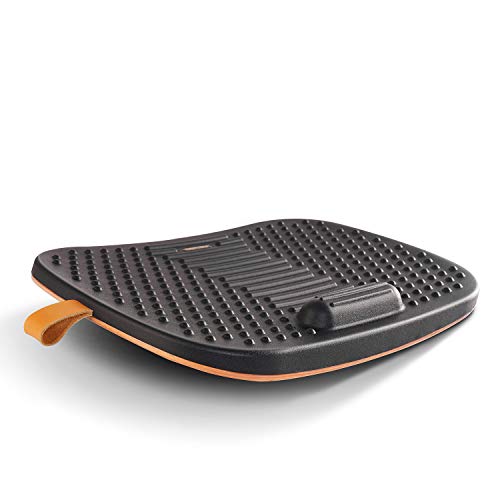
A supportive surface under your feet can make standing more comfortable over a full day.
View on Amazon
A monitor riser raises the screen to eye level without changing the desk height.
View on Amazon
A separate keyboard tray lets you keep wrists neutral when the desktop is set high.
View on Amazon
FAQ
How high should a desktop height adjustable standing desk be?
Set it so your elbows bend at about 90 degrees with relaxed shoulders, both when sitting and when standing. Your body measurements determine the exact height, so test both positions before settling on a setting.
How long should I stand each day?
Many people alternate between standing and sitting in blocks of 15 to 30 minutes. Start with shorter periods and increase gradually as your body adapts. Consult a healthcare professional if you have existing joint or circulation concerns.
Do I need a mat for a standing desk?
A cushioned or anti-fatigue mat can reduce strain on your feet and legs during long standing periods. It is helpful but not required if you shift your weight and move regularly.
Conclusion
A desktop height adjustable standing desk works best when it is set correctly for both positions and used as part of a routine. Measure your elbow height, align your screen and keyboard, and switch positions regularly. Small, consistent changes will do more for comfort than long stretches in either position.
Related reading
- Yoga at Desk Exercises: 10 Seated and Standing Moves for Work
- Standing Workstation for Desk: A Step-by-Step Setup Guide
Ready to choose one?
About Lauren Holland
Lauren Holland is part of our editorial team and reviews and edits our fitness at work guides, checking product details against manufacturer specifications and owner feedback.