
 By Caleb Morgan
Updated November 2026
This review looks at the DRAGONN by VIVO Ergonomic Adjustable Kneeling Chair with Back Support, a dragonn ergonomic kneeling chair with back support aimed at home and office users who want an alternative to a standard seat. It is built for people who sit for long stretches, prefer a forward-tilted posture, and want a stool that can be used at a desk or a home workstation. It is a weaker match for anyone who needs deep recline, full armrest support, or a chair designed for heavy daily use in a commercial setting. Shoppers who have had knee sensitivity should check with a physical therapist or doctor before switching to a kneeling-style seat, since kneeling postures are not comfortable or appropriate for everyone.

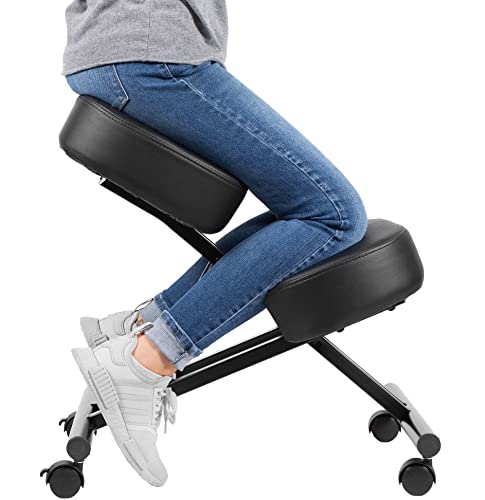
DRAGONN by VIVO Ergonomic Adjustable Kneeling Chair with Back Support | Stool for Home & Office, Improve Posture with Angled Seat, Thick Comfortable Moulded Foam Cushions, Black, DN-CH-K02B
Product Overview
The DRAGONN by VIVO kneeling chair belongs to the category of ergonomic kneeling chairs, a seating style where the user rests the shins on a padded pad that sits lower than the seat. The idea is to open the hip angle and shift part of the body weight to the shins, which encourages an upright spine without relying on a backrest alone. This model adds a back support component to the basic kneeling design, which is the main reason many shoppers consider it over a plain kneeling stool.
The product is sold as a black chair with a moulded foam cushion and an angled seat. The listing describes the seat as thick and comfortable, and the angled design is intended to tilt the pelvis forward. Because kneeling chairs change how the body sits, they are usually used as one option in a rotation with a standard chair rather than as a full-time replacement. Think of this chair as a tool for varying your posture across the day.
The brand, VIVO, is known in the office furniture space for height-adjustable desks and monitor arms, and the DRAGONN line is positioned as its ergonomic seating range. Model DN-CH-K02B is the variant with back support, while the DN-CH-K01B is a related version without it. Buyers comparing the two should pay attention to which model number they are ordering.
Key Features & Specifications
The table below lists only the features named in the product listing title and widely associated with this model. Exact dimensions and weight limits vary by listing and should be confirmed on the product page before purchase.
| Feature | Details |
|---|---|
| Brand | DRAGONN by VIVO |
| Model Number | DN-CH-K02B |
| Chair Type | Ergonomic adjustable kneeling chair with back support |
| Seat Design | Angled seat to promote forward pelvic tilt |
| Cushioning | Thick, moulded foam cushions |
| Color | Black |
| Intended Use | Home and office |
| Adjustability | Height adjustable (confirm range on listing) |
Pros & Cons
Pros
- Back support component adds a backrest option that many plain kneeling stools lack.
- Angled seat is designed to encourage an open hip angle and a more upright torso.
- Moulded foam cushioning is intended to reduce pressure on the shins and seat bones.
- Neutral black finish blends into most home and office settings.
- Works as a rotation option alongside a standard desk chair.
Cons
- Kneeling posture is not suitable for people with knee, hip, or ankle problems.
- Limited recline and armrest support compared with a full task chair.
- Owners often report that the shin pad can feel firm during the first few sessions.
- Not designed for extended all-day sitting without position changes.
- Heavier users should verify the stated weight capacity before buying.
Performance Analysis
Kneeling chairs perform differently from conventional office seats, so performance should be judged against the purpose they serve. In general, a kneeling chair works by changing the angle between the torso and the thighs. When the hip angle opens, many users find it easier to keep the lumbar curve in a neutral position without slumping. The angled seat on this model is intended to support that effect, and the back support component gives users a place to lean when they want a break from kneeling.
Manufacturers typically describe thick moulded foam as a way to spread pressure, and owner feedback on kneeling chairs commonly centers on whether the cushioning feels adequate after an hour or more. Foam density matters here: softer foam compresses quickly, while firmer foam holds its shape but can feel harsh on the shins at first. Many users report a short adjustment period of several days, after which the pressure points become more tolerable. Anyone who finds the shin area uncomfortable after a week should consider lowering the chair height or shortening sessions.
Stability and movement are the other key areas. Kneeling chairs without casters are harder to reposition, while those with wheels can roll during use. Shoppers should check whether the base includes locking or braking casters, since owners of similar kneeling designs often report that unlocked wheels make getting on and off the chair less stable. Height adjustment is also important: the chair should allow the knees to rest comfortably with the hips slightly higher than the knees. If the listing does not clearly state the height range, measure your desk height and leg length before ordering.
Overall, this type of chair tends to work best for people who want a lighter-duty alternative for short to medium sessions and who are willing to alternate postures. It is less suited to users who need full support for hours without movement.
Who Should Buy This Product?
This chair suits several types of users. People who work at a computer for long periods and want to change their seated posture will find a kneeling design useful as a rotation option. Those who already use a standing desk may appreciate a seat that feels different from a standard chair. Home workers with a small desk area may also prefer a compact stool-style design over a bulky task chair.
It is a weaker choice for anyone with knee, hip, or ankle pain, since kneeling loads these joints. People who need a deep recline, full armrests, or a chair rated for heavy daily commercial use should look at a conventional ergonomic task chair instead. Anyone with a medical condition affecting posture or spinal health should talk with a physical therapist, occupational therapist, or doctor before changing their workstation.
Buying Guide
Before buying any kneeling chair with back support, check the following points carefully.
- Measure your desk height and leg length. The shin pad should sit low enough that your knees bend at roughly 90 degrees or slightly more, with the seat tilting forward.
- Confirm the weight capacity. Manufacturers specify maximum loads, and exceeding them can damage the frame or cause instability.
- Look at cushion thickness and density. Thicker foam adds comfort for the shins, but very soft foam may bottom out quickly.
- Check the casters. Locking or braking wheels make the chair easier to use on hard floors and safer to get on and off.
- Decide on back support needs. A backrest helps during breaks from kneeling, but some users prefer a stool without one for a more active posture.
- Plan a rotation. Use the chair for part of the day and alternate with a standard chair or a standing period.
If you want to compare alternatives, two well-known options are worth considering. The first is the DRAGONN by VIVO Ergonomic Kneeling Chair for Home & Office, a related model without the back support component that many shoppers choose when they want a simpler stool.
DRAGONN by VIVO Ergonomic Kneeling Chair for Home & Office | Adjustable Stool, Improve Posture with Angled Seat, Thick Comfortable Moulded Foam Cushions, Brake Casters, Black, DN-CH-K01B
The second is an ergonomic kneeling chair with a footrest and a 4-inch cushion, which may appeal to users who want a wider pad and an optional foot rest for transitions between positions.

Ergonomic Kneeling Chair with Footrest, Adjustable Kneeling Office Chair | Kneeling Chair with Back Support, 4" Thick Cushion kneeling stool with 2 Locking wheels for Home Office, Improve Postures
For readers still deciding on the overall category, our guide to the Ergonomic Office Kneeling Chair: A Step-by-Step Setup and Buying Guide covers height setup and posture basics in more detail. Those who want a broader look at seating options can also browse 6 Best Ergonomic Kneeling Chairs with Back Support for Posture (2026) and 5 Best Dragonn Ergonomic Kneeling Chair Picks for Posture (2026).
FAQ
Is a kneeling chair with back support good for all-day sitting?
Most kneeling chairs are designed for shorter sessions and position changes rather than eight hours of continuous use. Alternating between kneeling, leaning on the backrest, and sitting in a standard chair or standing is the most common approach among users.
How long does it take to get used to kneeling?
Many users report a period of several days to a couple of weeks. Starting with 20 to 30 minute sessions and increasing gradually is a common recommendation.
Can kneeling chairs hurt your knees?
They can, especially for people with existing knee, hip, or ankle issues. Anyone with joint pain should consult a doctor or physical therapist before using a kneeling chair regularly.
Does the back support help with posture?
A backrest gives you a place to rest during breaks, which can reduce fatigue. It does not replace good form, so keep your shoulders relaxed and your screen at eye level.
What height should the kneeling chair be?
Set the height so your knees are bent at about 90 degrees or slightly more, with your hips a little higher than your knees. Your desk height should allow your forearms to rest comfortably on the keyboard.
Are casters important on a kneeling chair?
Casters make it easier to move the chair, but they can roll when you shift your weight. Locking or braking casters are generally preferred for stability.
Can I use this chair at home and in the office?
The listing describes it for home and office use. Check the weight capacity and floor surface compatibility before placing it in either setting.
Final Verdict
The DRAGONN by VIVO kneeling chair with back support is a reasonable choice for desk workers who want a posture-changing option with a backrest for breaks. Its angled seat and moulded foam cushioning address the most common concerns with kneeling designs, and the neutral black finish fits most spaces. It is not a replacement for a full task chair, and it is not suitable for users with knee, hip, or ankle problems. Measure your desk and body dimensions, confirm the weight capacity, and plan to rotate it with other seating for the best results.
View on AmazonBefore changing your seating setup, especially if you have a history of back, knee, or joint problems, consult a qualified healthcare professional or physical therapist.
About Caleb Morgan
Caleb Morgan is part of our editorial team and reviews and edits our fitness at work guides, checking product details against manufacturer specifications and owner feedback.
