 By Caleb Morgan
Updated November 2026
Choosing an ergonomic chair for herniated disc pain comes down to lumbar support you can actually adjust, a seat that doesn’t press into the lower back, and a recline range that lets you shift posture during long workdays. This list compares five widely available options against those criteria, using manufacturer specifications and patterns from owner feedback. It is not a substitute for medical advice, so check any changes to your workspace with a physical therapist or physician if your symptoms are severe.
Our top picks at a glance
- 1
 TOP CHOICEBest overallErgonomic Office Chair for Long Hours, 4" Molded Foam Cushion, 350 LBSView on Amazon
- 2
 TOP CHOICEBest for recline and footrestErgonomic Massage Office Chair with Footrest, Comfy Computer Chair, BlView on Amazon
- 3
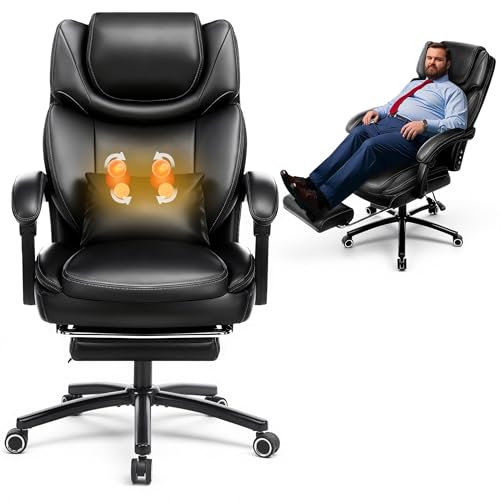 TOP CHOICEBest for heavier frames500LBS 3D Kneading Massage Office Chair with FootRest, Big and Tall ErView on Amazon
- 4
 Best add-on cushionSeat Cushion with Back Support,Lumbar Support Pillow for Office Chair,View on Amazon
- 5
 Best for adjustable mesh supportCAPOT Ergonomic Mesh Office Chair, Adjustable Lumbar High Back Desk ChView on Amazon
Our Top Picks
| Product | Best for | Key feature |
|---|---|---|
| Ergonomic Office Chair for Long Hours | Overall all-day support | Adjustable lumbar, flip-up arms |
| Ergonomic Massage Office Chair with Footrest | Reclining and leg elevation | 155° recline, retractable footrest |
| 500LBS 3D Kneading Massage Office Chair | Larger body frames | Heavy-duty base, 3D armrests |
| Seat Cushion with Back Support | Adding support to any chair | L-shaped memory foam design |
| CAPOT Ergonomic Mesh Office Chair | Fine-tuned adjustability | 4D arms, 3-level tilt |
Ergonomic Office Chair for Long Hours
Best for: Overall all-day support
This is a solid default for someone who sits for most of the day and wants adjustable lumbar support without a complicated setup. Manufacturers specify a 350-pound capacity and a 4-inch molded foam cushion.
Pros:
- Adjustable lumbar support and flip-up arms
- Breathable mesh back with tilt and rock settings
Cons:
- Seat foam may feel firm for some users
Ergonomic Massage Office Chair with Footrest
Best for: Reclining and leg elevation
Suited to people who need to change posture often and take pressure off the lower spine by reclining. The listing specifies a 155-degree recline and a retractable footrest.
Pros:
- Deep recline with a footrest for unloading the lower back
- Lumbar massage function and 3.2-inch seat cushion
Cons:
- Massage function adds complexity and may not suit everyone
500LBS 3D Kneading Massage Office Chair
Best for: Larger body frames
Designed for users who need a higher weight rating and a sturdier base. Owners often mention the heavy-duty metal base as a reason for choosing it over lighter models.
Pros:
- 500-pound rated capacity with a heavy-duty metal base
- Padded linkage armrests and a footrest
Cons:
- Larger footprint than standard task chairs
Seat Cushion with Back Support
Best for: Adding support to any chair
A useful option if you already own a chair you like but need extra coccyx and lumbar relief. The L-shaped memory foam design is marketed for sciatica and tailbone pressure.
Pros:
- Works with most existing office chairs
- L-shaped design relieves tailbone pressure
Cons:
- Cannot replace adjustable chair mechanics
CAPOT Ergonomic Mesh Office Chair
Best for: Fine-tuned adjustability
Best for people who want to dial in lumbar height, armrest position and backrest tilt separately. The listing specifies 4D flip-up arms and a 3-level tilt backrest.
Pros:
- 4D armrests and adjustable lumbar height
- Breathable mesh with 3-level tilt
Cons:
- Many adjustment points take time to learn
Buying Guide
Adjustable lumbar support
Look for lumbar support you can move up and down and adjust in depth. Fixed curves often miss the spot that matters for disc-related pain.
Seat cushioning and pressure relief
A seat that is too firm or too soft can increase pressure on the lower back. Thick foam with a cutout or L-shaped design can reduce pressure on the tailbone and sciatic region.
Recline and posture changes
Being able to recline slightly, typically in the 100 to 130 degree range for many users, lets you change load on the spine. Check the maximum recline and whether tilt can be locked.
Weight capacity and base stability
Check the rated capacity and base construction. A chair that feels unstable can cause you to brace and tense the back muscles.
Good picks for this: Ergonomic Office Chair for Long Hours, CAPOT Ergonomic Mesh Office Chair
FAQ
Can an ergonomic chair fix a herniated disc?
A chair cannot repair a herniated disc, but the right support can reduce strain during sitting. Consult a doctor or physical therapist for a treatment plan.
Is a cushion enough, or do I need a new chair?
A cushion can help if your chair already has adjustable lumbar and a reasonable seat. If the chair lacks adjustments, a new chair usually makes a bigger difference.
How often should I change position while sitting?
Many physical therapists suggest changing posture every 30 to 60 minutes and standing briefly during the day. Follow the advice your own clinician gives you.
Related reading
- Ergonomic Chair for Degenerative Disc Disease: 6 Setup Steps That Help
- Wooden Ergonomic Kneeling Chair (2026): Which Should You Choose?
- White Mesh Ergonomic Office Chair: A Step-by-Step Buying Guide
About Caleb Morgan
Caleb Morgan is part of our editorial team and reviews and edits our fitness at work guides, checking product details against manufacturer specifications and owner feedback.