 By Lauren Holland
Updated November 2026
Standing desk back problems usually come from how the desk is set up and how it is used, not from standing itself. This guide walks you through the setup checks, posture cues and movement habits that can reduce strain on your lower back. If your pain persists or worsens, consult a doctor or physical therapist before making further changes.
Why a Standing Desk Can Strain Your Back
Standing still for long periods loads the lower back and hips, and locking your knees or leaning on one leg shifts stress onto the spine. Many people also hunch forward over a monitor set too low, which adds pressure on the lumbar region. A standing desk for back problems works best when it encourages you to change positions often rather than stand frozen in one spot.
Shopping for one? See our guide: 6 Best Standing Desk for Home Office (2026): Expert Picks.
Set Your Desk Height and Screen Position
Start with the height, since it affects everything else. Stand upright with your shoulders relaxed and your elbows bent at about 90 degrees, then adjust the desk so your forearms rest level with the keyboard. Place the top of your monitor at or just below eye level, roughly an arm’s length away, so your head stays stacked over your shoulders.
Quick Setup Checklist
- Measure your elbow height while standing and set the work surface to match.
- Raise the monitor until the top edge sits at eye level.
- Keep the keyboard and mouse close enough that your shoulders do not reach forward.
- Use a footrest or shift your weight every few minutes to avoid locking your knees.
- Wear supportive shoes with a firm sole rather than stand on bare or thin-soled feet.
Build a Sit-Stand Rhythm
Most desk workers do best alternating between sitting and standing rather than standing all day. A common starting pattern is 30 to 60 minutes standing, then 15 to 30 minutes sitting, adjusted to how your back feels. Shorter standing blocks early in the week, extended gradually, give your spine time to adapt. For more on building this habit, see Using a Standing Desk: 7 Setup and Habit Steps for Your Workday.
Add Movement to Relieve Back Tension
Gentle movement every hour helps keep your back from stiffening. Try a few slow hip hinges, standing knee bends and a standing back extension, stopping any move that causes sharp pain. For a set of short routines you can do between tasks, see Standing Desk Exercise Basics and Yoga at Desk Exercises: 10 Seated and Standing Moves for Work. Pair lower body work with Standing Legs for Desk: How to Stand Comfortably for Hours at Work to keep your legs and hips from tiring out.
Common Mistakes
- Standing motionless for hours without shifting weight or changing position.
- Setting the monitor too low, which pushes your head and upper back forward.
- Locking the knees and leaning back against the desk edge.
- Jumping straight to full-day standing instead of building up gradually.
- Ignoring persistent or radiating pain, which needs a professional evaluation.
Recommended Gear
A standing mat gives your feet and lower legs a slightly cushioned surface that encourages small weight shifts. View on Amazon
A monitor riser lets you raise the screen to eye level without crowding the desk surface. View on Amazon
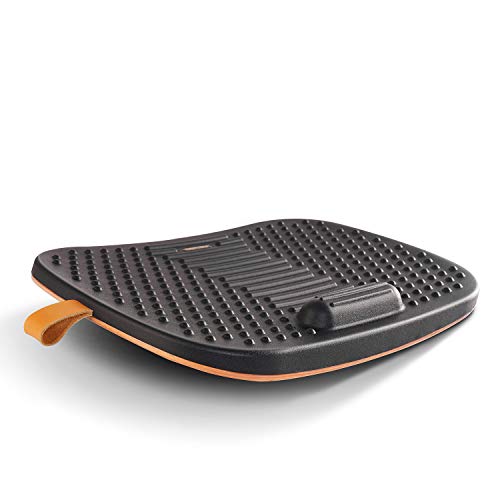
A footrest lets you rest one foot at a time, which can take pressure off the lower back during long standing stretches. View on Amazon
FAQ
Can a standing desk make back pain worse?
It can, especially if you stand motionless for long periods or work with poor screen and keyboard height. Adjusting the setup and alternating positions often helps.
How long should I stand each day if my back hurts?
Start with short standing blocks, such as 15 to 20 minutes, and increase slowly based on how you feel afterward. If pain lasts or worsens, consult a doctor or physical therapist.
Is a standing desk for back problems better than a regular desk?
It is not automatically better. For many people it helps when used with regular position changes and proper ergonomics, but it does not replace medical care for ongoing pain.
Conclusion
Standing desk back problems are usually fixable with the right height, a sit-stand rhythm and regular movement. Start with the setup checklist, then add breaks and gentle exercises as your back adapts. If pain persists, talk to a healthcare professional rather than pushing through it.
Related reading
- U Shaped Standing Desk: How to Choose and Set One Up Right
- Standing Workstation for Desk: A Step-by-Step Setup Guide
Ready to choose one?
About Lauren Holland
Lauren Holland is part of our editorial team and reviews and edits our fitness at work guides, checking product details against manufacturer specifications and owner feedback.