 By Caleb Morgan
Updated November 2026
The steelcase amia ergonomic office chair is a mid-range task chair built around adjustable back tension, flexible lumbar support and a sliding seat. It suits desk workers who sit for most of the day and want a chair they can tune to their body rather than accept as-is. It is a weaker fit for shoppers who need a plush, cushioned seat right out of the box, people who want a highly reclined or rocking chair, or anyone who needs a chair that works for a very large or very small body without some adjustment. This review is based on manufacturer specifications and the patterns owners commonly describe, not on our own hands-on testing.

Steelcase Amia Ergonomic Office Chair with Adjustable Back Tension and Arms | Flexible Lumbar with Sliding Seat | Black Frame and Buzz2 Black Fabric
Product Overview
This listing is for the Steelcase Amia Ergonomic Office Chair with adjustable back tension and arms, a flexible lumbar system, a sliding seat, a black frame and Buzz2 black fabric upholstery. The Amia line belongs to Steelcase, a long-established American office furniture maker, and the chair is aimed at people who spend long stretches at a desk and want their seating to adapt to them. It is positioned as a task chair for home offices and commercial workspaces alike, and it is more adjustable than most chairs in its general class.
The design centers on a backrest that flexes with the user’s spine and a seat that slides forward and back. Owners who have used it often describe the tuning options as the main reason they kept it, since the chair can be set for a fairly upright posture during typing or eased back for reading and phone calls. Because there are several independent adjustments, setup takes a few minutes, and the payoff depends on taking that time. If you want more background, see Oline ErgoPro Ergonomic Office Chair Review: Features and Performance.
Key Features & Specifications
The table below lists the features named in the product title and the characteristics the Amia line is generally known for. Where the exact dimension varies by configuration, we have described the feature rather than inventing a number. Check the listing and the manufacturer’s sheet for exact measurements before buying. For a deeper look, Flexispot Foldex Ergonomic Office Chair Review (2026) covers this in detail.
| Feature | What It Means for Daily Use |
|---|---|
| Adjustable back tension | A dial controls how firmly the backrest resists recline, so lighter or heavier users can match the chair to their weight and preference. |
| Flexible lumbar support | The backrest flexes to follow the lower spine, which is intended to support the natural curve of the lower back during sitting. |
| Sliding seat | The seat pan moves forward and back so the backrest can sit against the spine when the user’s leg length or desk distance changes. |
| Adjustable arms | Armrests can be moved to support the forearms at a comfortable height while typing or using a mouse. |
| Black frame | A black finish that suits most office and home office décor. |
| Buzz2 black fabric | Breathable upholstery in the Buzz2 pattern, black in color, designed for everyday seating. |
| Chair type | Task chair intended for desk work, not a lounge or gaming chair. |
Pros & Cons
Pros
- Multiple independent adjustments (back tension, lumbar, sliding seat, arms) let most users dial in a fit.
- The flexing backrest is designed to move with the spine rather than hold a fixed shape.
- Sliding seat helps the backrest contact the back at the right point across different body sizes.
- Neutral black finish and fabric fit most workplaces and home offices.
- Established manufacturer with a long record in commercial seating.
Cons
- Setup takes a few minutes and requires experimenting to find the right settings.
- Fabric upholstery is less cushioned than many buyers expect from a chair in this class.
- Fit may be less suitable for very tall or very short users without further adjustment.
- Not designed for reclining or lounging, so it is a poor choice for people who want a relaxed, deep recline.
- Owners who prefer a firm, minimal seat may find the padding soft over long days.
Performance Analysis
Performance in an ergonomic chair comes down to whether the adjustments can actually match a range of body types and tasks. On paper, the Amia’s combination of back tension, flexible lumbar and sliding seat covers more of that range than a basic fixed-back task chair. The practical result is that most users can reach a seated position where the lower back is supported, the forearms rest near the desk height and the feet sit flat, which is the general target most ergonomic guidance describes.
Owner feedback tends to cluster around three themes. The first is the back tension dial: people who set it too loose find the chair rocks back under them, while those who set it too tight feel their back is held rigidly. Most owners settle on a middle setting after a week or two. The second theme is the seat slide, which owners often report as the feature that made the biggest difference to comfort, particularly for those whose legs are short or long relative to the desk. The third theme is fabric comfort: the Buzz2 upholstery is generally described as breathable, though some owners find the seat firmer than they expected and add a cushion.
Durability reports are generally positive for a commercial-grade chair, though long-term wear depends on use patterns and whether the mechanisms are maintained. Users who keep the chair in a stable spot and avoid leaning hard on the arms tend to report the fewest issues. Because specific long-term failure rates are not something we can verify, treat durability as a general expectation rather than a guarantee.
Who Should Buy This Product?
This chair is a good match for someone who sits at a desk for most of the workday, types regularly and wants a chair that can be tuned to their own body. It also suits anyone who has previously used a basic chair and felt that the back or hips ached by mid-afternoon, since the adjustability gives more room to correct the problem. Home office workers who want a chair that looks professional on camera and works in a shared room will also find it a sensible option.
It is a weaker choice for people who want a deeply padded seat, a chair for gaming or lounging, or a chair for someone who wants to sit in a fully reclined posture for long periods. Shoppers who are very tall, very short or have specific medical needs should also consult a professional, such as an occupational therapist or a physician, before relying on any chair for a condition. The information here is general and not a substitute for individual medical advice.
Buying Guide
Before buying any ergonomic task chair, check four things: seat height range, seat depth and width, whether the arms adjust in the directions you need and whether the lumbar support can be set where your lower back actually needs it. Measure your popliteal height (the distance from the floor to the underside of the thigh when seated) and compare it to the seat height range in the spec sheet. If you are shorter or taller than average, pay close attention to the seat slide and height range. For another angle, check out Hbada P2 Ergonomic Office Chair Review: Features and Performance.
Setup matters as much as the purchase. Use this sequence to get the most from the Amia or any similar chair:
- Set the seat height so your feet rest flat on the floor and your knees sit slightly below your hips.
- Slide the seat forward or back until there is roughly a hand’s width between the front edge of the seat and the back of your knees.
- Adjust the lumbar so it fills the small curve of your lower back without pushing forward.
- Set the back tension to a middle position, then recline slightly and adjust until the chair supports you without feeling like it is pushing you forward or letting you sink back.
- Raise or lower the armrests so your forearms rest lightly with shoulders relaxed.
If you want a chair in a similar class that is built around the same goals, consider these alternatives. Each suits a slightly different budget or preference:
- Steelcase Amia Office Chair, Most Comfortable Sit (Buzz2 black fabric, with four points of adjustability and an adjustable lumbar): a close relative of the chair reviewed here, aimed at shoppers who want the same adjustability range with an emphasis on comfort.
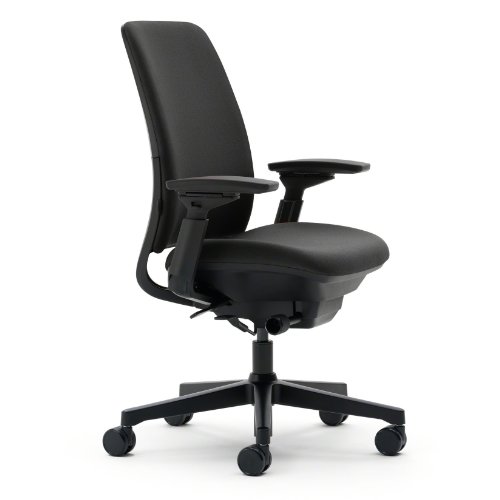
Steelcase Amia Office Chair, Most Comfortable Sit, Buzz2 Black Fabric | Most Comfortable Sit, 4 Points of Adjustability, Ergonomic Desk Chair, Upper Back Support & Adjustable Lumbar Support
- Steelcase Amia Chair (Renewed) (black fabric, black frame): the same chair family sold as a renewed unit, which many shoppers consider as a budget pick if they are comfortable with a refurbished item.

Steelcase Amia Chair (Renewed) (Black Fabric Black Frame)
For further comparison, you may also want to read Steelcase Amia Ergonomic Task Chair: Setup, Fit and Buying Guide, which covers the same model family, and Top 6 Ergonomic Office Chair Tall Picks for Tall Users in 2026 if you are on the taller side.
FAQ
Is the steelcase amia ergonomic office chair good for long workdays?
It is designed for extended desk use, and its adjustability lets most users find a supportive position. Comfort still depends on setup, so plan to spend a few minutes tuning the back tension, lumbar and seat slide before judging it. For a deeper look, Sihoo M57 Ergonomic Chair Review: Features and Performance covers this in detail.
How do I know what size chair I need?
Compare your popliteal height and leg length to the seat height and depth range in the manufacturer’s specifications. The seat slide helps cover some variation, but very tall or very short users should check the range carefully.
Does the chair recline a lot?
It is a task chair with controlled recline rather than a deep lounge chair. The back tension dial governs how easily it leans back, which suits typing and focused work better than relaxed reclining.
Is the Buzz2 fabric comfortable?
Owners generally describe it as breathable and suitable for daily use. Some find the seat firmer than expected, and a seat cushion can help if that is a concern.
Can I use this chair at home as well as in an office?
Yes. The black frame and fabric suit most home offices, and the chair’s adjustments work the same way in either setting.
Should I buy a renewed chair instead of new?
A renewed unit can be a reasonable choice if you are comfortable with a refurbished item and want to save money. Check the seller’s return policy and inspect the mechanisms when the chair arrives.
Who should I talk to about back pain while sitting?
If you have ongoing back, hip or neck pain, consult a doctor or physical therapist. A chair can help with posture, but it is not a treatment for a medical condition. Worth reading next: Elabest X100 Ergonomic Office Chair Review (2026).
Final Verdict
The steelcase amia ergonomic office chair is a well-adjustable task chair that rewards users who take time to set it up. Its strengths are the combination of back tension, flexible lumbar and sliding seat, along with a neutral look that suits most workspaces. Its limits are a firmer seat than some buyers expect and a design aimed at upright task work rather than lounging. If you sit at a desk most of the day and want a chair you can tune, it is a strong candidate. If you want plush cushioning or a deep recline, look elsewhere.
View on AmazonRelated reading
- Tralt Office Chair Ergonomic Desk Chair: Setup and Buying Guide (2026)
- Topjob Napa Ergonomic Chair: 5 Best Picks Compared for Home and Office (2026)
- Top 7 Ergonomic Criss Cross Office Chairs with Flip Arms and Lumbar Support
About Caleb Morgan
Caleb Morgan is part of our editorial team and reviews and edits our fitness at work guides, checking product details against manufacturer specifications and owner feedback.