By Lauren Holland
Updated November 2026
A vivo L shaped standing desk gives you a corner workspace that can rise and fall, so you can alternate between sitting and standing without clearing your setup. This guide walks you through checking fit, setting the right height, arranging your screens and building a habit that lasts through the workday. You will finish with a desk that suits your body and your room.
Step 1: Measure your space and your body
Start with the room. Measure the wall lengths where the two desktop sections will sit, and leave at least 36 inches of clear floor in front of each section so you can step back and move your chair. Check that the corner is free of door swings, radiators and outlets that would block the legs or cable path.
Shopping for one? See our guide: 6 Best Standing Desk for Home Office (2026): Expert Picks.
Next, measure yourself. Stand straight in your usual shoes and measure from the floor to your bent-elbow height. That number is your starting point for standing desk height. Keep it in mind for Step 3.
Step 2: Plan the layout and cable path
An L shape works best when your main monitor sits directly in front of the longer run, with the shorter run holding a secondary screen, keyboard or writing surface. Sketch the arrangement on paper first. Mark where your power strip will go and route cords through the frame channels or a cable tray so they do not catch when the desk moves.
If you are still deciding on the overall shape, our guide on Standing Desk L Shape: How to Choose and Set Up an L-Shaped Standing Desk covers layout options in more detail.
Step 3: Set the height for sitting and standing
Set the desktop so your forearms rest level with the surface while your shoulders stay relaxed. For standing, a common target is elbows at about 90 degrees with the keyboard just below elbow height. Then set a second position for sitting, adjusting your chair so your feet rest flat and your thighs are roughly parallel to the floor. A related read: Standing Desk Table Topper: A Step-by-Step Guide to Setup (2026).
- Sit or stand with your back in its natural posture, not hunched forward.
- Check the monitor top sits at or slightly below eye level.
- Save both positions in the desk’s memory presets if your model has them.
For a deeper walkthrough of fine-tuning, see Standing Desk Height Adjustment: A Step-by-Step Guide for Setting It Right.
Step 4: Build a switching routine
Most people do best when they change position often rather than standing for long stretches. A practical starting pattern is 30 to 60 minutes seated, then 15 to 30 minutes standing, adjusted to how your body feels. Pair each switch with a short movement break, such as a few calf raises or a slow neck roll. Many office workers find it helps to tie the switch to a recurring event, like a meeting ending or a timer going off.
If standing tires your legs, the article Standing Legs for Desk: How to Stand Comfortably for Hours at Work offers practical adjustments, and Using a Standing Desk: 7 Setup and Habit Steps for Your Workday covers building the routine.
Checklist before you finish
- Confirm both desktop sections clear the walls and doors.
- Route all cords through the frame and check they stay slack at full height.
- Set and save a sitting height and a standing height.
- Place the monitor at eye level and the keyboard at elbow height.
- Test a full up-and-down cycle with nothing on the surface, then with your equipment in place.
Common mistakes
- Choosing a corner that is too tight, leaving no room to move the chair.
- Placing the monitor too low, which pushes your head and neck forward.
- Standing still for long periods instead of shifting weight or switching positions.
- Letting cords catch on the frame, which can damage the cable or the desk.
- Skipping the saved presets, so you adjust from scratch every time.
Recommended gear
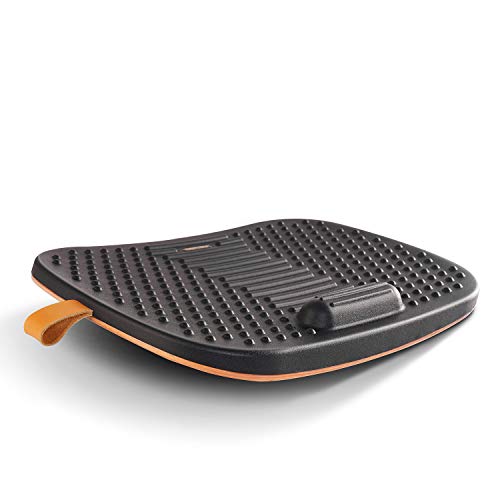
A footrest or anti-fatigue mat can make standing sections more comfortable on hard floors. Owners often report that a mat with a slightly firm, textured surface encourages small leg movements. View on Amazon
A monitor arm lets you raise or lower the screen to match the desk height changes you make throughout the day. View on Amazon
A cable management tray keeps power strips and cords off the floor and clear of the frame. View on Amazon
FAQ
How much floor space does an L shaped standing desk need?
Plan for clear floor in front of each desktop section so you can stand, step back and move your chair. A minimum of about 36 inches is a common guideline, but check the manufacturer’s specified dimensions for your model.
How high should a standing desk be for me?
Aim for elbows at roughly 90 degrees when standing, with the keyboard just below elbow height and your monitor top at or slightly below eye level. Adjust from there based on how your shoulders and wrists feel.
Is standing all day good for my health?
Prolonged standing can strain the legs and back for some people, so alternating positions is generally recommended. If you have circulation problems, joint pain or back issues, consult a doctor or physical therapist before changing your work posture.
Conclusion
A vivo L shaped standing desk works best when the room, the monitor height and the switching routine all fit together. Measure first, set both a sitting and a standing height, and keep your cords and screens in order. Once the setup feels right, the habit of changing positions becomes much easier to keep.
Related reading
Ready to choose one?
About Lauren Holland
Lauren Holland is part of our editorial team and reviews and edits our fitness at work guides, checking product details against manufacturer specifications and owner feedback.